

Minimally Invasive Treatment for Vascular Conditions of the Brain and Spine
Neurointerventional surgery, sometimes called interventional neuroradiology or neurovascular surgery, is a specialized field focused on diagnosing and treating vascular conditions affecting the brain, neck and spine. This approach uses small, flexible tubes called microcatheters that are threaded through blood vessels to treat abnormalities without traditional open surgery.
At Northeast Georgia Health System our neurointerventional surgeons use these minimally invasive techniques to treat complex vascular conditions, many of which previously required more invasive surgery or were considered untreatable.
Why choose NGHS Neurointerventional Surgery
As a regional leader in neurointerventional care, our program has high quality outcomes compared to national benchmarks. We’re able to achieve these outcomes for patients due to the expertise of our neurointerventional surgeons and our integrated, aligned critical care teams that follow our patients throughout their entire experience. Our compassionate, highly experienced surgeons will walk you through each step of the process. Finally, our patients have access to the latest and most advanced imaging and surgical technologies and environments at NGMC.
Conditions we treat
- Brain aneurysms
- Brain bleeding
- Ischemic stroke
- Brain and spinal arteriovenous malformations (AVMs)
- Brain and spinal dural arteriovenous fistulas (DAVFs)
- Carotid artery stenosis
- Intracranial stenosis
- Moyamoya disease
Advantages of neurointerventional surgery
Compared to traditional open surgery, neurointerventional procedures generally offer:
- Smaller and fewer incisions
- Reduced pain and risk of infection
- Faster recovery times
- Shorter hospital stays
- Lower risk of complications
These benefits help patients return to their daily activities sooner with less disruption.
What to expect
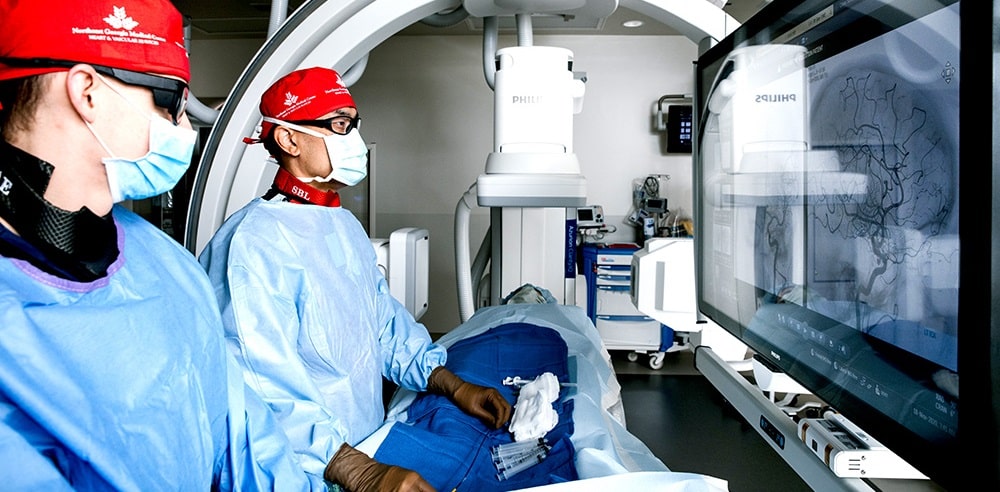
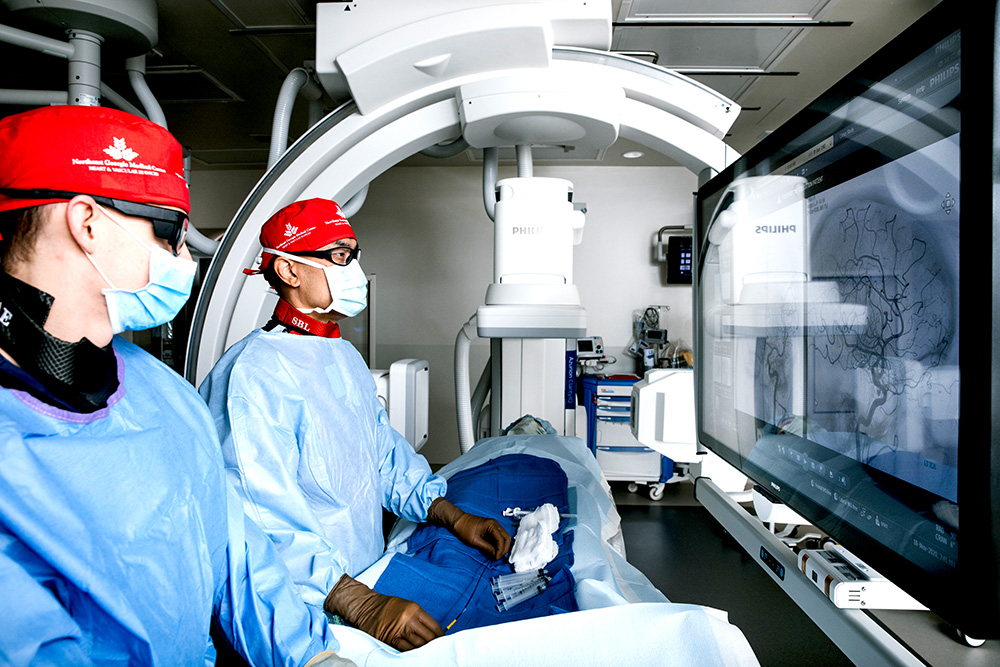
Neurointerventional procedures are typically performed through a small puncture in an artery, most often in the groin or wrist. Using real-time imaging guidance, our surgeons navigate microcatheters to the affected area to perform treatments.
The procedures are usually done under sedation or general anesthesia, depending on the complexity. Most patients experience shorter hospital stays and quicker recoveries compared to traditional surgery.
Neurointerventional procedures are performed at our state-of-the-art Neurointerventional Lab at NGMC Gainesville. Here, patients receive the best care using the latest technology available.
Frequently asked questions
Your doctor will determine if you have a vascular condition in the brain, neck or spine that requires treatment through diagnostic imaging such as angiograms or MRIs. Neurointerventional surgery may be recommended as a less invasive alternative to traditional surgery.
Yes, a referral from your primary care provider or another specialist is typically required. Contact us if you need help with the referral process.
Minimally invasive neurointerventional procedures are generally safe, especially when performed by experienced specialists using advanced imaging. Like all surgeries, there are risks which will be discussed during your consultation.
Recovery varies by procedure and individual condition but is usually faster and less painful than traditional open surgery, with shorter hospital stays and quicker returns to normal activity.
Get started
If you or a loved one has a neurological or vascular condition affecting the brain or spine, begin by getting a referral from your primary care provider. You can also schedule an appointment directly with one of our neurologists or neurointerventional surgeons to discuss your symptoms and treatment options.
For patients seeking care for brain aneurysms, we also offer an elective brain aneurysm repair program where you may self-refer without a provider’s referral. This program provides second opinions and treatment options for brain aneurysms beyond watchful waiting.