


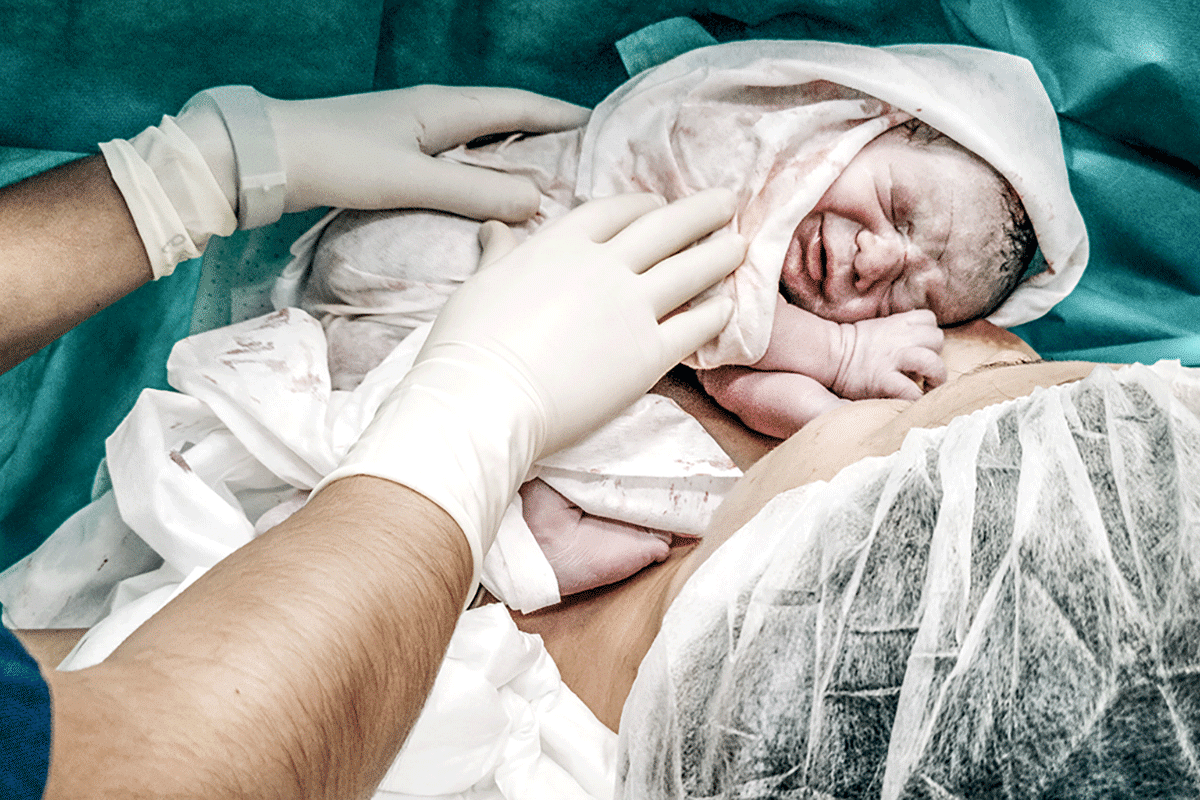
Expecting a new addition to your family is an exciting time. You may be setting up a nursery, choosing a going‑home outfit, installing a car seat, or thinking ahead to labor and delivery.
One topic many expectant parents have questions about is cesarean delivery, commonly called a C‑section.
Even if you’re planning a vaginal birth, understanding what a C‑section involves can help you go into delivery knowing what to expect. Sometimes, a cesarean delivery becomes the safest option if concerns arise for the health of the mother, the baby, or both during pregnancy or labor.
Cesarean deliveries are very common in the United States. In recent years, about 30 – 33% of U.S. births are delivered by C-section. Many of these procedures are life‑saving and performed with your safety, comfort and recovery in mind.
Below I answer the six most common questions I get asked about C‑sections as an OB/GYN.
1. How long does a C-section take?
Most c-sections take about 45 to 60 minutes from start to finish. The total length can vary based on whether it is planned or performed urgently, as well as other factors specific to you and your health.
Before surgery begins, your care team will prepare you by starting an IV for fluids and medications, cleaning the abdomen, placing a urinary catheter to keep the bladder empty, and often using leg compression devices to reduce the risk of blood clots.
Once surgery begins, most babies are delivered within the first 5 to 10 minutes. The remaining time is spent delivering the placenta and carefully closing the uterus and abdominal layers.
2. Are you awake during C-section surgery?
Most people are awake during a C-section. Regional anesthesia numbs the lower half of your body so you feel no pain, but you stay alert and can experience the birth.
Several anesthesia options may be used during a C-section, and the best choice depends on the situation and your medical history. Your anesthesiologist will discuss these options with you.
Most planned C‑sections are performed using regional anesthesia. Options include:
- Spinal anesthesia, which numbs the lower half of the body
- Epidural anesthesia, often used if one is already in place during labor
- A combined spinal‑epidural, which works quickly and can be adjusted if needed
General anesthesia, which puts you completely to sleep, is uncommon and typically reserved for emergencies or specific medical situations.
With regional anesthesia, many parents are awake to experience immediate bonding, including skin‑to‑skin contact, when it is safe for both parent and baby.
3. Where will my C-section scar be?
During a C‑section, an incision is made in the skin and abdominal wall, followed by an incision in the uterus.
Yes, you will have a scar, but for most people, it fades significantly over time and sits low enough to be covered by underwear or a swimsuit. The most common incision is a low transverse (“bikini”) incision, placed just above the pubic hairline. This incision typically heals well and is easier to conceal. Vertical incisions are used less often and only when medically necessary.
Most skin incisions measure about 4–6 inches — large enough to safely deliver the baby.
The uterine incision is closed with dissolvable sutures. The skin incision may be closed using stitches, staples, or surgical glue, depending on what is safest and most appropriate for you.
4. How long will I stay in the hospital after a C-section?
Most people stay in the hospital for 2 to 4 days following a C‑section. The exact length depends on how you’re recovering, the reason for the surgery, and whether any complications occur.
If you’re recovering well, your care team may clear you to go home closer to the 2-day mark.
While in the hospital, your care team will monitor your recovery, help manage pain, encourage early movement, and support infant feeding and bonding.
5. What is recovery like after a C-section?
A C‑section is a major abdominal surgery, and recovery takes time. Most people feel noticeably better week by week, even if the full six weeks feel far off at first.
Most patients are encouraged to sit up and walk within 12–24 hours after surgery, which helps reduce complications such as blood clots and supports bowel function and healing.
Full recovery typically takes about six weeks, though many people notice gradual improvement in energy and comfort before that. During this time:
- Avoid lifting anything heavier than your baby
- Limit strenuous activity and exercise until cleared by your provider
- Follow guidance on driving, work, and physical activity
Accepting help from family and friends can make recovery easier and allow you to focus on healing and caring for your newborn.
6. How can I reduce my risk of complications after a C-section?
Before leaving the hospital, your doctor will review what to expect during recovery and when to call for help.
It’s normal to experience:
- Mild cramping
- Vaginal bleeding or spotting
- Tenderness, numbness, or itching around the incision
Contact your care team if you experience:
- Fever or chills
- Heavy bleeding (soaking a pad in an hour)
- Increasing redness, swelling, or drainage from the incision
- Worsening pain
- Leg pain or swelling
- Shortness of breath
To lower the risk of complications:
- Move regularly as advised
- Care for your incision as directed
- Avoid baths or swimming until cleared
- Use pads instead of tampons
- Delay vaginal intercourse until your provider gives the green light
While complications such as infection, blood clots, or excess bleeding are uncommon, prompt attention to concerning symptoms helps ensure a safe recovery.
Talk to your OB/GYN
C-sections aren’t always planned, but they’re one of the safest and most common surgeries performed. Today’s cesarean care prioritizes getting you back on your feet and bonding with your baby as quickly and safely as possible. If you have questions about C‑sections or your delivery plan, your OB/GYN can answer questions specific to your pregnancy and help you prepare.