

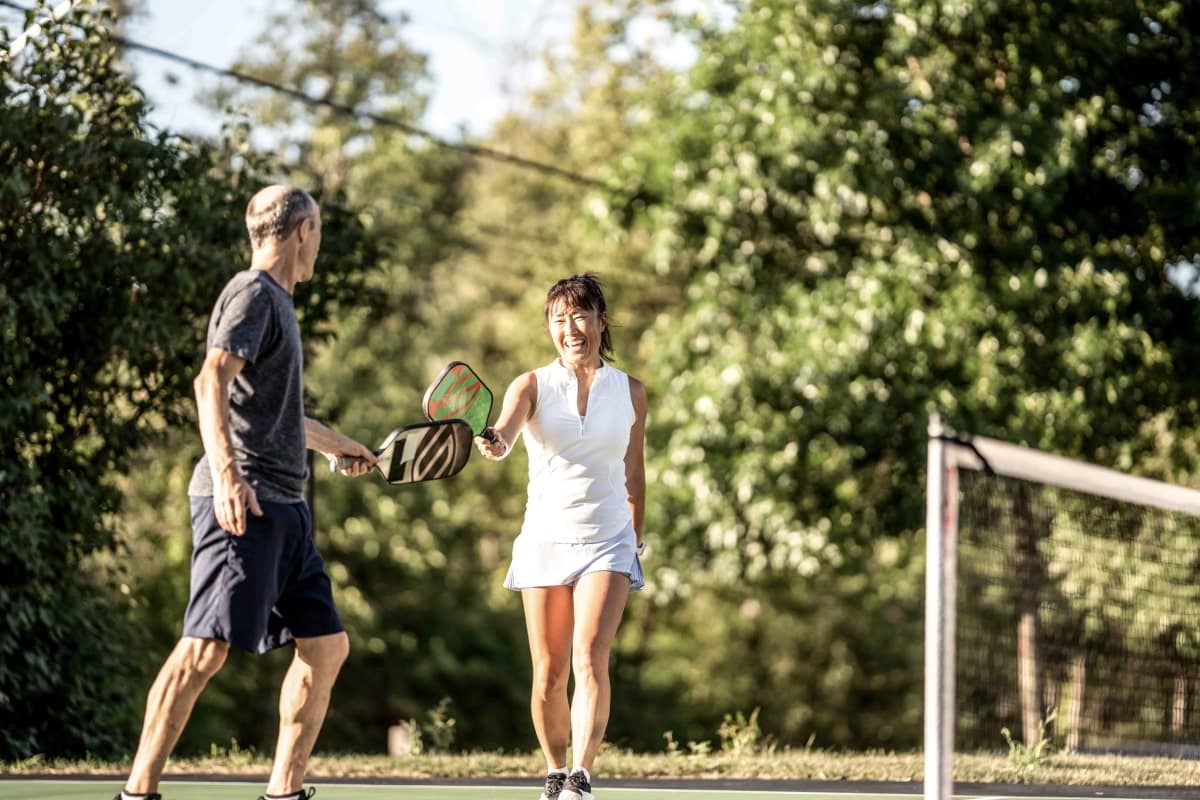
As an orthopedic surgeon serving patients in Gainesville and throughout north Georgia, I’ve seen a sharp increase in pickleball-related injuries over the past few years. What started as a trickle of sprained ankles has turned into a steady stream of shoulder repairs, knee reconstructions and tendon problems. The sport has taken off across our communities, especially among active adults who appreciate that it is highly accessible and a lower-impact sport than tennis or running.However, “lower impact” doesn’t mean injury free.
While pickleball offers excellent health benefits, it can place real strain on the joints and soft tissues, especially when players ramp up frequency too quickly or skip warming up. Here’s a look at the most common pickleball injuries we see at NGPG Orthopedic Surgery, and what you can do to stay on the court.
Sprains and Strains from Pickleball
Sprains and strains are among the most common pickleball injuries. These injuries often affect the ankles, wrists, calves and shoulders. Most happen during quick pivots, lunges, or the first few minutes of play before your muscles have fully warmed up.
How to Prevent Sprains and Strains
- Warm up with light cardio and dynamic stretching before playing
- Wear supportive, court‑specific shoes
- Use a paddle with proper grip size for your hand
Treatment Options
Most mild sprains and strains respond well to rest, ice, compression, and elevation (RICE). Over‑the‑counter medications such as acetaminophen or anti‑inflammatories may help manage pain in the first few days. If you’re hurting for more than a week, or if walking or playing is difficult, it’s worth having an evaluation by an orthopedic specialist to rule out our more significant injury.
Tennis Elbow in Pickleball Players
Despite the name, tennis elbow is one of the most common complaints among pickleball players in the Gainesville area. Repetitive gripping and swinging motions can irritate the tendons alongthe outside of the elbow. Over time, that adds up. What started as an ache during play begins disrupting daily tasks, making opening jars or lifting a coffee cup painful and difficult for patients.
Prevention Tips
- Use proper stroke mechanics
- Choose a paddle with correct grip circumference
- Strengthen forearm muscles gradually
Treatment
Conservative care works well for most people. Rest, physical therapy, forearm bracing, and temporarily dialing back play are often enough to find relief. When that doesn’t offer improvement, we may recommend nonsurgical treatments or injections to reduce inflammation and help you get back to full range motion and strength without surgery.
Shoulder Injuries from Pickleball
Pickleball places repetitive stress on the shoulder, particularly during overhead shots. The smash, the overhead lob, even the serve puts torque through the rotator cuff. I frequently diagnose rotator cuff tendinitis or tears, bursitis, biceps tendinitis, and labral injuries. I also see a fair number of players who played through shoulder pain for months before coming in, which tends to make treatment more involved.
Preventing Shoulder Injuries
- Focus on shoulder and core strength
- Maintain proper posture and serving technique
- Avoid playing through pain
Advanced Treatment Options
Many shoulder injuries get better with physical therapy, medication and activity modification. However, for injuries that don’t improve or involve a more significant structural issue, we may start with imaging to get a clearer picture. When surgery is the right call, minimally invasive and robotic‑assisted techniques allow for precise repair, smaller incisions, and faster recovery for the right patients.
Knee Injuries in Pickleball
Sudden stops, twisting motions, or falls can lead to serious knee injuries. Playing along thekitchen line, where players lunge and pivot constantly, is where a lot of injuries happen. I seemeniscus tears, ligament injuries, and cartilage damage most often, particularly in active adultswho are playing several times a week across North Georgia.
Prevention Strategies
- Wear shoes designed for court sports
- Strengthen quadriceps and hamstrings
- Work on balance and flexibility
Treatment options
Treatment for knee injuries depends on the severity. Many patients do well with physical therapy, injections and structured return-to-play plans. For players with advanced joint damage or arthritisthat hasn’t responded to conservative care, robotic‑assisted knee surgery can provide improved precision, alignment and long‑term outcomes that hold up well over time for qualified patients.
Achilles Tendon and Calf Injuries in Pickleball
Achilles tendon ruptures and calf strains deserve their own mention because they’re among the most serious injuries I see in pickleball players, and they tend to catch people off guard. The sudden push-off from a split-step or a lunge toward the kitchen can put enormous force through the Achilles. Patients often describe hearing or feeling a pop, followed by sharp pain in the back of the lower leg. Calf strains are more gradual but can sideline a player for weeks if ignored.
Prevention
- Warm up calves and Achilles with heel raises and dynamic stretches before play
- Avoid sudden increases in play frequency or intensity
- Wear court shoes with good rear-foot support and cushioning
Treatment
Calf strains are usually manageable with rest, compression, and a gradual return to activity over two to four weeks. A partial or complete Achilles rupture is a more significant injury. Depending on severity, treatment may involve immobilization or surgical repair, followed by a structured rehabilitation program. Most patients who commit to rehab are able to return to recreational pickleball, though recovery can take several months.
When to See a NGPG Orthopedic Surgeon
If you’re experiencing:
- Persistent joint pain
- Swelling or instability
- Limited range of motion
- Pain that worsens with activity
Don’t wait to see if it gets better on its own. In my experience, injuries that are caught and treated early are far easier to manage than those that have been played through for months. An early evaluation usually means more options, a shorter recovery, and a faster return to the game you enjoy. The orthopedic team at NGPG in Gainesville treats pickleball players across north Georgia, and we can help you figure out exactly what’s going on and what to do about it.