


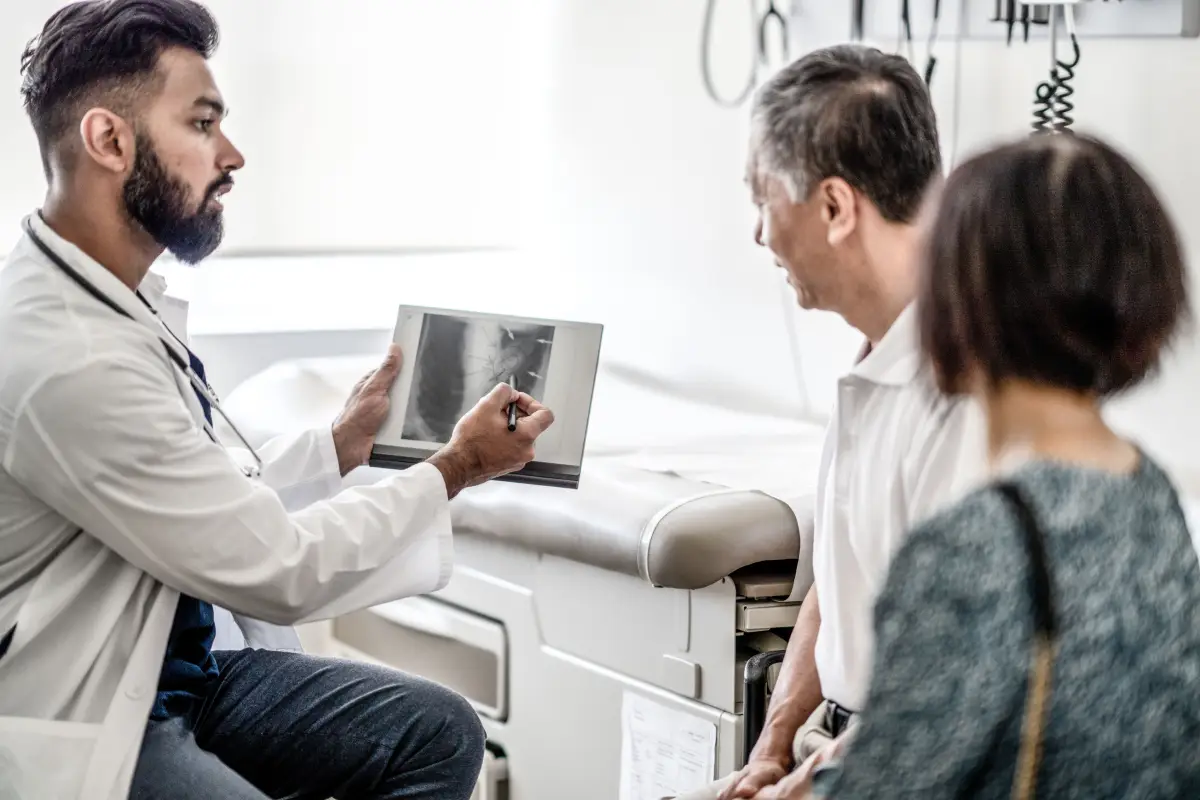
If you’ve ever scheduled an appointment and learned you’ll be seeing a physician assistant (PA), you may have wondered what that means and what role a PA plays in your care.
It’s a question I hear often as a PA. The simple answer is that PAs are highly trained healthcare providers. We diagnose illnesses and injuries, create treatment plans, prescribe medications, perform procedures, and work closely with physicians and the rest of the care team so patients get the care they need.
Whether you’re visiting a primary care office in North Georgia, seeing a specialist, recovering from surgery or receiving care in the hospital, a PA may be one of the providers helping guide your healthcare journey.
What is a physician assistant?
A physician assistant, or PA, is a licensed medical provider with a professional medical degreetrained to evaluate, diagnose and treat patients. Every physician assistant completes graduate-level education and extensive hands-on clinical training in the medical model, preparing them to work closely with physicians and other members of the care team.
Like physicians, PAs can:
- Perform physical examinations
- Diagnose illnesses and injuries
- Order and interpret diagnostic tests
- Prescribe medications
- Develop treatment plans
- Perform certain procedures
- Assist in surgery
- Provide patient education and follow-up care
In many cases, a visit with a PA looks just like a visit with any other medical provider. We work collaboratively with physicians and other healthcare professionals to deliver high-quality, coordinated care.
What is an advanced practice provider (APP)?
You may also hear PAs called advanced practice providers, or APPs. APP is simply the broader term that healthcare organizations, including Northeast Georgia Health System, use for licensed clinicians who diagnose and treat patients alongside physicians but aren’t physicians themselves.
APP covers two types of providers:
- Physician Assistants (PAs) – professionals trained in a generalist medical model that lets them move between specialties over the course of a career.
- Nurse practitioners (NPs) – clinicians trained in an advanced nursing model, often focused on a specific patient population, such as family, pediatric or acute care.
Both PAs and NPs can examine, diagnose, treat and prescribe medication within their scope of practice. At NGHS, APPs work throughout our hospitals and clinics as part of an integrated, collaborative care model for our patients.
Where do physician assistants work?
One thing that stands out about this profession is how many different settings a PA can work in.
Across our system, PAs practice in a wide variety of medical and surgical specialties, helping patients at every stage of care.
You may encounter a PA in:
- Primary Care
- Orthopedics and Sports Medicine
- General Surgery
- Cardiology
- Pulmonary Medicine
- Obstetrics and Gynecology
- Trauma Surgery
- Neurosurgery
- Oncology
- Hospital Medicine
- Urgent Care
From routine wellness visits to complex surgical procedures, PAs help patients access timely, expert care close to home.
How do PAs work with physicians?
One common misconception is that a PA is an assistant to a physician. While collaboration is a key part of our role, PAs are licensed, highly trained medical providers who are directly involved in your care, not just substitutes waiting for a physician’s approval.
Healthcare is a team effort. Physicians, PAs, nurse practitioners, nurses, therapists and many other professionals each bring different skills, and patients benefit when those roles work together instead of in isolation.
In my own practice, for example, I work closely with orthopedic surgeons while seeing patients directly. Depending on the situation, I may evaluate a new injury, review imaging results, help manage recovery after surgery, answer questions about treatment options or assist during surgical procedures.
You’ll find this same team-based approach wherever PAs or other APPs practice across Northeast Georgia Health System.
Why might I see a PA instead of a physician?
Many patients are surprised to learn that seeing a PA is a routine part of receiving care.
You may see a PA for:
- New patient visits
- Follow-up appointments
- Preventive care
- Chronic disease management
- Injury evaluations
- Hospital consultations
- Post-operative care
Because physician assistants work as part of an integrated care team, we help improve access to care while keeping your treatment on track from one visit to the next.
In fact, a PA may be one of the providers you see most often, helping to answer questions, tracking your progress and helping coordinate your next steps.
What education and training do physician assistants receive?
Becoming a physician assistant takes years of extensive medical education, hands-on clinical training and a commitment to lifelong learning.
Most PAs earn a bachelor’s degree and gain healthcare experience before completing a graduate-level physician assistant program. Their training includes classroom instruction in anatomy, physiology, pharmacology and clinical medicine, along with clinical rotations in specialties, such as primary care, surgery, emergency medicine and orthopedics.
Programs, such as the Physician Assistant Studies program at Brenau University, help prepare future PAs through a mix of classroom learning and hands-on patient care. Partnerships like this let us help train the next generation of healthcare providers right here in our community.
After graduation, PAs must meet licensing and certification requirements before they can practice. Physician assistants are nationally certified through the National Commission on Certification of Physician Assistants (NCCPA) and licensed by the state medical board, which is why you’ll often see the credential “PA-C.”
No matter if a provider is identified as a PA or PA-C, the 211 physician assistants practicing at Northeast Georgia Health System meet the education, licensure and credentialing requirements established for their role.
Like many healthcare professionals, our advanced practice providers often develop expertise within a specific area of medicine. Some practice in primary care, while others focus on specialties, such as orthopedics, cardiology, trauma surgery, oncology or emergency medicine, to name a few.
Across our system, PAs and other APPs serve in a variety of specialties and collaborate with physicians and care teams to deliver high-quality, patient-centered care.
And because medicine is always evolving, PAs are required to complete continuing education throughout their career to stay current.
The benefits of having a PA on your care team
Having a PA on your care team can help you:
- Access care more quickly
- Receive education and support
- Navigate treatment options
- Coordinate care among providers
- Build long-term relationships with their healthcare team
- Stay connected throughout their care journey
Our goal is simple: to help patients feel informed, supported and confident in their care.
The Bottom Line
PAs work alongside physicians and other healthcare professionals to provide coordinated, patient-centered care. Whether you’re visiting a primary care office, specialty practice, surgical clinic or hospital, you may find a Physician Assistant helping guide your care journey every step of the way.
Your Health. One Connected Care Team.
Across Northeast Georgia Health System, Northeast Georgia Physicians Group and Longstreet Clinic, physicians, physician assistants and other healthcare professionals work together to provide expert, patient-centered care.